Episode Transcript
[00:00:02] Speaker A: Welcome to the Love Justice Podcast where we hear from different voices who are joining us in the fight against modern day slavery. Today's episode is part of our Stories Edition.
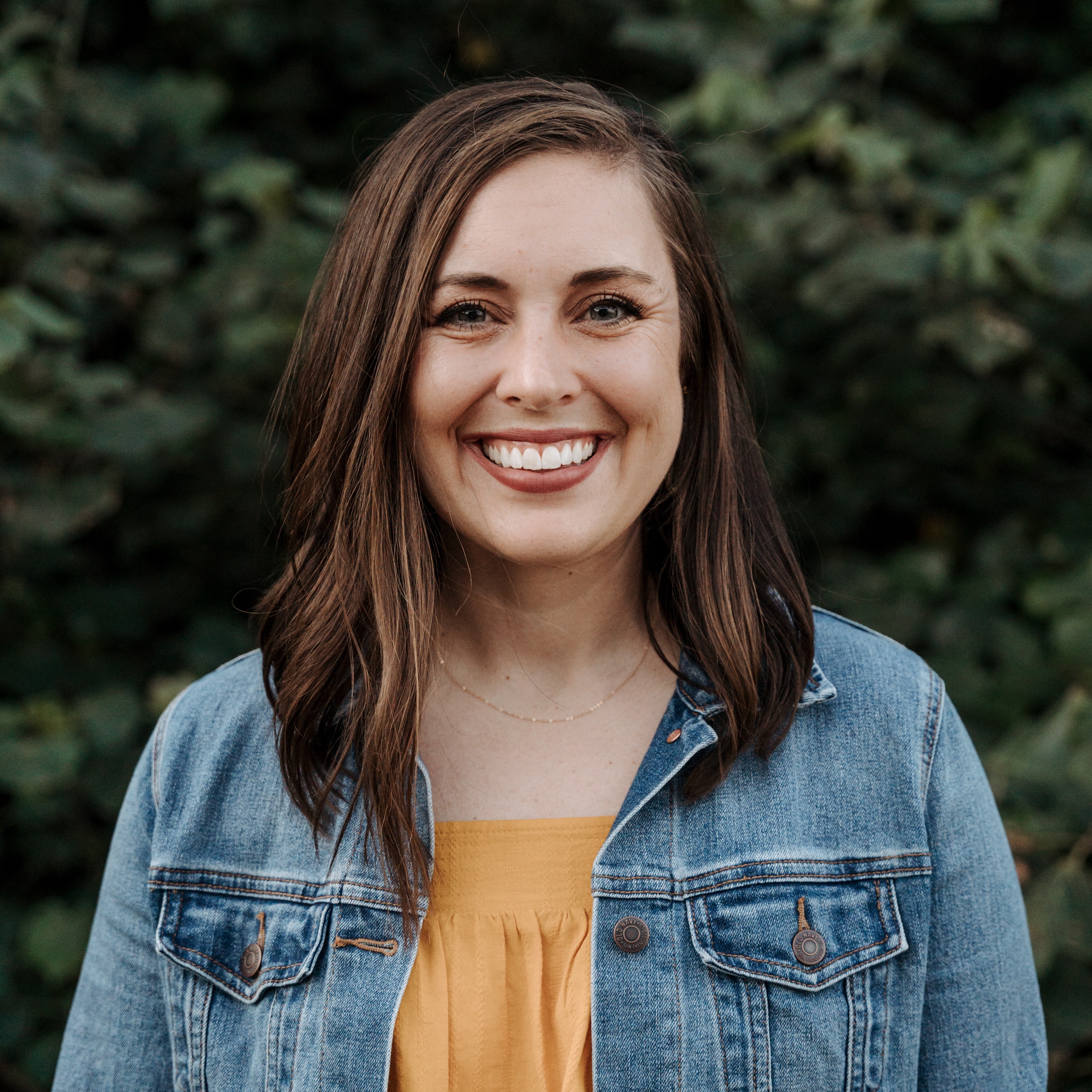
[00:00:15] Speaker B: Hi, my name is Paula Cornell and you're listening to a Stories edition of the Love Justice Podcast. For this episode, I had the honor of speaking with an incredible young woman named Isami. Isami is a survivor of human trafficking as well as a public speaker, a content creator, weightlifter, aerialist, cat lover, and self proclaimed amateur human professional weirdo. You can find her on Instagram samiinspires. Isami Inspires Unlike our other Stories Edition features, Isami's story is not directly tied to Love Justice's work. She was not intercepted by our teams nor is she a monitor with us, though she is a friend of a former staff member. But her experiences offer a unique perspective on a kind of trafficking that isn't talked about as much. Familial trafficking and a rare glimpse into the healing journey for survivors.
Her voice is a powerful one and I hope her story increases your understanding, grows your compassion, and inspires you to take the next step in the fight against human trafficking.
[00:01:19] Speaker A: I grew up in Japan. My parents were there as missionaries. My dad was from Japan, he's recently passed away.
My mom was from the US and came over as a single missionary and met my dad over there. And so together they had somewhat of a ministry until I was about 15 and things got a little shady from there. But about the time I was around nine years old, we had someone attending that church that was still around at the time and this person took a liking to me. They were an adult, they were married, in a committed relationship, but they were a very skilled pianist and so they became our church pianists very quickly and wanted to be around all the kids all the time. So people just thought they were great with kids. But it wasn't too long after that this person had gained my trust that the sexual abuse started to happen.
And what was really, really hard to accept even as an adult looking back, is that my mother was fully aware of what was going on.
And so in exchange for what was happening to me, free piano lessons were being provided to myself and my siblings.
[00:02:31] Speaker B: Isami's dad had anger issues that splintered any hope of a secure home base. Still, appearances were extremely important to Isami's parents. No matter what was going on in the home, they wanted everyone else to think they were good Christian parents and missionaries. Having kids who were skilled in playing music helped accomplish that perfect image.
It can be a difficult thing to accept that family members can play a role in trafficking their own children or relatives.
Unfortunately, it happens more than you might think. In 2017, the International Organization for Migration, the IOM, reported that 41% of child trafficking situations happen via a family member or caregiver's involvement.
These cases are especially challenging to identify or prosecute.
Children naturally depend on their family and may feel a sense of loyalty. They also don't yet have a lot of context for what is normal outside of their own home.
When Isami tried to speak up about what was happening, her mother silenced her.
[00:03:33] Speaker A: It was really tough as a kid because you see this happening to yourself.
You hear these things about what people can and can't do with their bodies. Yet something is being done to me and at times was even done in front of my mother and excused.
And it just brought me up in this sense of confusion, of knowing what was okay, what was not. I really struggled with my own identity even into adulthood. It was normalized at such a young age.
That was everything I knew. So even into adulthood, I just assumed that happened to everybody.
And it wasn't until I started going to therapy and meeting other people that had healthy families that I recognized, wait a minute, this isn't normal at all.
[00:04:22] Speaker B: It would be many years before Usami would realize that she had been trafficked, even though she had a growing passion for fighting human trafficking. That's because of another part of the story, which we'll get to soon.
In her late 20s, she worked with a safe house for trafficking survivors in Florida, directing social media. During training events for the safe house, Isami would teach others how to communicate with survivors and families through social media.
[00:04:46] Speaker A: When I was working with them.
I started telling my story at these training events.
And one time I shared what had happened to me and just said, hey, you know, it's going to be touchy when we work with these survivors or their families. This could be what they say, could be what happens. And as I was sharing my story, there was a couple of people who were really listening intently. And one of them came up to me afterwards and said, you know, what happened to you is trafficking, right?
And that shocked me because I had started to understand that trafficking isn't just the, you know, taken movie or thrown in the back of a van or brought in by a cargo ship type situation.
I hadn't fully grasped that what had happened to me. The idea of an exchange of good or service was still falling under that umbrella. And it took me a while to accept it because no one wants to think of themselves that way. But once I did, it did bring a lot of freedom because I could finally start to heal.
What I could finally put a name to what happened to me.
[00:05:52] Speaker B: As I mentioned, Isami developed a passion for fighting human trafficking before she even knew that that was what happened to her.
That's because of something that happened during the two and a half years she worked as a flight attendant. Part of her training for the job was on how to spot the red flags of human trafficking. It's a type of training you hope you never need. But in one flight, that training proved very important.
That one incident would change her life forever.
[00:06:16] Speaker A: There was one particular flight where we were flying from Minneapolis to Tokyo, and there was a alleged family on that flight. And there were a lot of strange behaviors. There were some major red flags that caused me to kind of hover and pay close attention. So the woman and the child were next to the man. The man sat in the aisle at any time they went to get up, to get anything, bathroom, whatever. He had to go with them everywhere they went. I thought, that's weird.
[00:06:51] Speaker A: So they get back to their seat, they do this a couple times. Then I walk by to check on the little guy to see how he's doing. I'm like, hey, you want any snacks?
[00:06:59] Speaker A: And he just. He would look at me, but then he'd look away. And I thought, okay, well, sometimes it's a neurodivergent thing where eye contact is tough. I thought, okay, maybe. Maybe he's okay.
Maybe he's just really not hungry. But every time I would try to speak to him, the man would answer. I was like, oh, that's different. Okay. So I left him alone.
All of these in flight seats have movie screens, so something to watch, games for kids to play.
But he just sat there the entire 12 and a half hours. That's not normal. This little guy was probably 8 years old, 10 years old, somewhere between there.
[00:07:42] Speaker A: He didn't say a word.
I thought he didn't even have an iPad or a book.
Not even a coloring book or a stuffed animal.
[00:07:51] Speaker B: This is weird.
[00:07:53] Speaker A: And then I kind of, like, went over again, and I looked over and I thought, oh, that's even weirder. He didn't have any personal belongings, Nothing. Normally, kids got, like, a backpack with, like, water or snacks or something in it or their favorite toy. Like, there's none of that. That's weird.
So then I started asking questions.
[00:08:15] Speaker B: And.
[00:08:15] Speaker A: Anytime I'd come by to ask, you want some water? You want some juice? Guy would answer every time.
Oh, that's weird.
So then the mom did talk a little bit, and I asked her, you know, where are you going? And she would say, oh, going on vacation.
I was like, oh, wow, that's great.
Like, how have you. Are you guys from Minnesota? Are you. Where are you guys going? And she's like, oh, yeah, we live in Minnesota. He was born and raised there. I'm like, oh, that's great.
And I guess she was originally from Thailand.
I don't think the son was the guy's biological son.
And I was like, oh, interesting. Well, later, another flight attendant came by because I told them. I was like, something. Something feels off about this family.
And she went by to ask the husband what they were doing. He's like, oh, yeah, we're going back home. I thought they were going on vacation. The stories weren't alighting.
And another flight attendant came by and tried to talk to the boy, and he goes, oh, yeah, he doesn't speak English.
I thought you said he was born and raised in the U.S. and went to school in the U.S.
that's weird. So either he's not going to school and talking to other kids, or something's really off here.
[00:09:31] Speaker B: I want to pause to point out that these red flags Isami mentions are all things that love. Justice's monitors look for and commonly see someone speaking for another person like that man did is the reason our monitors often separate people for individual interviews. Not having personal belongings can be a trafficker's means of ensuring a victim is dependent on them.
Stories not aligning is a classic sign of deception.
She was right to notice these things, but there was only so much that Isami could do.
[00:10:00] Speaker A: So I call up to the flight deck and I say, hey, heads up. Got this family sitting in this row, this row, this row, this seat.
And I'm suspecting some human trafficking here recently through our training. These are the details. You know, not allowed to speak, not allowed to have personal items, not allowed to use the restroom.
[00:10:24] Speaker A: Mismatched stories where they're going.
[00:10:28] Speaker A: Just things are not aligning. What can we do?
And the response was, you know, it could. It's probably just nothing.
And they're probably going on vacation, so let's not ruin it.
And I thought.
[00:10:46] Speaker A: I have no way of calling the ground people. You do, but.
[00:10:51] Speaker A: Are you sure? Because, like, something's just not right here.
He's like, no, no, no, let's. We're fine. We don't. We don't need to call anybody.
[00:10:59] Speaker A: So at the very end of the flight, putting the stuff away and then the plane lands.
And I will never forget this.
[00:11:10] Speaker A: I was up in first class waiting to greet everybody in Japanese goodbye.
And I look back and coach, the man stands up, holds back the entire airplane, makes the two of them stand in front of them.
So there's other people leaving so they can't run out. But he's right behind them and he has a bag with their passports and all their personal belongings. And the woman and the kid had nothing, nothing at all.
And they're getting off the plane and this kid looks up at me, he. He was wearing a striped T shirt. And I will never forget that look that he gave me of just absolute terror.
And I thought, God, what have I done?
And they left.
[00:11:57] Speaker A: I couldn't stop thinking about it.
And I tried to keep convincing myself what the pilot had said, it's nothing and they're going on vacation. But just something wouldn't let it go.
[00:12:09] Speaker B: After that flight, Isami called an anti trafficking hotline to report the incident. She gave them all the details, flight numbers, seat numbers, where they would land in Thailand and when they said, you.
[00:12:20] Speaker A: Know, thanks for calling.
But there's very different laws once they get into Thailand, so we would need to contact their police and get them involved. And to be honest, I don't really know if there's anything we can do.
[00:12:35] Speaker A: And.
[00:12:37] Speaker A: You know, when, if you've ever experienced like a car accident or if you've heard a gunshot or fireworks go off, that ringing sound in your ears where it's just complete silence, but that painfully piercing noise, that's what I heard probably for the next month.
And it haunted me. I didn't sleep.
[00:13:00] Speaker A: You know, it's been years and I feel like I've finally come to the place where I've made peace with that.
There is still that self blame, if I'm being honest, of what could I have done differently?
But that's what pushed me to look into other organizations. That's what really pushed me into this is what I'm going to dedicate my life to. If I couldn't help that little kid, if I couldn't help him and his mom get out of whatever hell they had to go through, then maybe there's one other person I can help.
And that's what really pushed me into becoming vocal, talking about it and then ultimately what led me to be a social media volunteer director at a safe house.
[00:13:46] Speaker B: It's a heartbreaking story, but it started a ripple of change in and through Isami that would impact many more lives for good.
As mentioned before, it Was during that time Isami volunteered at the safe house that she realized she too had been trafficked. Being able to name what had happened to her as a child was a huge step toward healing, and that personal healing would put her in a position to encourage healing in others too.
Since Love Justice's work is primarily preventive, we don't talk very much about what it's like for survivors to journey through the healing process.
Isami's story gives an important window into that experience.
[00:14:23] Speaker A: I first admitted out loud to a counselor, not really a he was a pastor, but he was a Counselor back in 2014, that the sexual abuse had happened to me. That's over 10 years ago.
And it all started because I recognized that I was having a problem with anger and I had lashed out at someone and the way I responded was totally uncalled for and I apologized, but it made me become afraid of myself.
Where I didn't know where this was coming from, why I'm normally really soft spoken. I can be a goofball, but normally I'm pretty soft spoken when I talk to people. And all of a sudden this person I didn't recognize came out and that person reminded me of my dad who had an extreme anger problem.
And I thought, oh, oh my God, like, who is this? I don't even know.
So I went to the counselor to talk about it.
And before we even dove into the anger, one of his first questions was, have you ever been sexually abused? And I lost it.
I just started crying and I told maybe like two people ever.
But I was so ashamed because I thought that that was like my fault or I had somehow warranted on that myself. I look back and think about it. A nine year old kid, you know, that's ridiculous. But that's how I thought at the time, like, oh, this was my fault.
[00:16:01] Speaker A: And so that got brought to light.
And it wasn't Until January of 2018, after I left the psychiatric facility that I saw a therapist and intensely started. I mean, we're talking twice a week.
My work was covering the insurance, thankfully. But I was meeting with this therapist twice a week at one point because it was so heavy and it had taken up so much space in my life. And I did pretty intense therapy for about six months and then it was more of a routine basis for another year and a half.
And since then I've been with various other therapists that have done emdr. For the longest time, I was in denial.
So much denial. It was easier to say things like, oh, maybe my mom didn't know any better. Even though it happened in front of her.
Well, maybe she did really care and maybe she would be sorry even though I confronted her about it as an adult and there was no remorse at all. But it has been really tough to make peace with that. I think a lot of therapy, a lot of talking to other survivors and just really connecting, even through social media. I've met so many other people who've been through the same thing. They just didn't know what to call it.
And knowing that I'm not alone has. Has really helped me come to peace.
And knowing that, you know, this isn't. This isn't the end for me. What happened to me was not my fault and it wasn't my choice.
That's given me so much more freedom and power to speak about that.
[00:17:31] Speaker A: But it is really empowering to be able to do that work and to. It's tough, it's hard, but to get to that point of like, oh, oh, you know what?
The story I share is no longer an embarrassment, and it doesn't belong to anybody else.
A story that I share doesn't belong to my abuser.
That person may not even remember me.
I hope they remember my face and never do that again.
But to me, it's my story and I get to share it and I get to tell it, because that's something no one can take away.
[00:18:12] Speaker B: One beautiful part of Isami's healing journey was changing her name. The name she was given at birth carried a lot of identity issues. For her, it was not a Japanese name, even though she was born and raised in Japan. The Japanese language uses kanji and hiragana characters, but it has a completely different set of characters for foreign words called katakana.
So every time her non Japanese birth name was written, it stood out as foreign.
[00:18:39] Speaker A: That was the identity I carried my whole life, is, you don't belong.
You should feel uncomfortable wherever you are, and you shouldn't take up any space.
And especially with what happened to me with sexual abuse.
[00:18:54] Speaker A: It was like a consistent reminder that, stay quiet, don't say anything. Your voice has no weight to it.
No one will listen.
Stay in your corner.
And I carried that for so long. There was just so much shame.
I started to think about it. I thought, well, who decides what my name is?
Is it the person that put me in that situation where I was sex trafficked?
Is it the person that decided, you know, know, oh, well, I want to make sure that you don't feel like you belong or that people know that you're not Fully Japanese.
Okay.
[00:19:37] Speaker B: Is.
[00:19:37] Speaker A: Is that the name and the message I want to carry for myself?
So I really started to think about it, and I realized, you know, that that's not. That's not at all what I want to say.
And this idea of my story being unclean or dirty or not good enough. That identity that I had carried for so long.
[00:20:00] Speaker A: What better way to change that into something beautiful? And so that's why I chose the name Isami. It's two kanji characters. One is for courage, and one is for beautiful, and that's what makes my name.
[00:20:12] Speaker A: Isami.
[00:20:13] Speaker B: Choosing a new name reminded me of how God renames people in the Bible when he brings them into a new season or calling.
Abram and Sarai became Abraham and Sarah. Simon became Peter. Saul became Paul. It's a powerful marker of a new identity.
We don't choose our names at birth. We don't choose our families or the circumstances we grow up in. There are plenty of things out of our control, but we can choose how we respond.
Isami longed for a healthy family dynamic, but when she accepted that some things wouldn't change, she found family in a different way.
[00:20:49] Speaker A: So I see my parents fighting. There's physical abuse.
[00:20:53] Speaker A: Towards us kids between them, so domestic violence.
There was just never any peace in the home.
And I would think, oh, man, be nice if we were able to not fight on my birthday or nobody would hurt each other on Christmas.
And you see all these things and you want that.
And I think even as an adult, even though, you know it's dysfunctional, you still try to reach for all, you know, as family.
And I think it's why it's so hard for survivors, especially, to leave that dynamic and cut ties, even though they know it's probably the best option for themselves and their kids.
[00:21:36] Speaker A: Or they go right back to it because it's all they know.
And they try to create this thing of, like, oh, well, you know, well, I've changed. So maybe my parents have changed, or this. This family or this uncle or this. Whoever did this thing has. Maybe they've changed. And so I want to experience a healthy relationship.
In my case, no matter what I gave, it was never enough.
It was never going to be a point where my parents fully accepted me for who I was or my mom even acknowledged what she did.
And I realized that if I waited around for some sort of apology to live a fulfilling life, I was never going to live at all. I was going to forever be stuck in this cycle of wishing and waiting and hoping.
But I can also empathize with myself back then of, hey, you just wanted peace, you wanted a family.
[00:22:38] Speaker A: But what is nice, though, is once I left all of that and left it all behind, I started realizing that the people that have also left their family because of these situations, I'm not talking about, you know, someone said something dumb in a group chat. That's not what I'm talking about, you know, that that can happen.
I'm talking about people who have left domestic violence, people who have left sex abuse, people who have left horrible things and just flat out things that they would never repeat on their children.
Those are the people that I've been able to connect with and say, you're my family.
And it's so amazing because even through that pain and even through the worst thing that's ever happened to us as survivors, there's just this, this life that gets born of.
[00:23:38] Speaker A: Family. And, you know, it's, it's, it's something that's hard to describe if you've never experienced it.
But knowing that there is someone that gets it and someone that's not going to abandon you and not scared or think what happened to you is shameful, that's an incredible thing. And it seems to be everywhere I've moved and now I live in Utah and.
[00:24:04] Speaker A: You know, I have people in my life that I would consider family.
[00:24:09] Speaker B: One of the things I was most intrigued by was Isami's faith. Of course, God is bigger than our human failings and church failings. But I've seen so many people walk away from God because of hurtful things done, done in or through churches. What is it like for a person who is trafficked and abused by members of a church to come to know God as someone separate from those traumatic experiences?
The church she grew up in taught that a simple acceptance of Jesus would get you to heaven, but then held rigid expectations that instilled a sense of fear. Almost as if you could earn or lose your salvation based on the clothes you wear, the music you listen, to, the language you use.
[00:24:48] Speaker A: I was terrified as a kid that I just, I prayed over, I prayed myself to sleep is what I would do. So I was so scared I was going to go to hell.
And it wasn't until I was 23 that I had this moment where I was really wrestling with the idea of peace. Did I pray the right thing? Did I say the right thing?
Did God actually hear me? Does God really love me? What does this even mean?
And I, I had a moment where I was actually coming home from church and I was sitting in my bedroom and I started reading this passage in Acts, chapter eight. And it's. It's a really powerful passage.
It talks about this guy that's on his way home from a place of worship. He's reading some really old passages in the Bible, doesn't understand what they mean.
In a nutshell, the guy shows up, that's like a. Basically a pastor, talks to him. He's like, hey, do you know what you're talking. Do you know what you're reading? He's like, no, I don't know what the guy's talking about. Okay, cool, let me explain it. They have a conversation, they chat. He goes, oh, so there's water.
Can I, like, follow Jesus? Is that cool? And he's like, yeah, let's do it. Okay, cool. So he makes this decision right there, and that's the end of the story. There's no him crying and screaming and begging God to forgive him at an altar. There's no, there's no time for him to go home and clean up his house or whatever habits he might have had. It's just this moment of him recognizing and accepting everything that was already done. And I thought to myself, I was like, wait, no, no, no, no, no. Like, I'm a pastor's kid.
I give my money to the church, I tithe. And I'm former chaplain at a juvenile detention center. Like this mile long list, right, of why I'm good enough to go to heaven.
And in that moment, I felt that God, some people call this the Holy Ghost or Holy Spirit, speak to me.
And it wasn't an audible voice, but it was just sense of clarity, of like, hey, nice list. But you do realize you're forgetting one very crucial thing on that, and that's, where's Jesus? Like, where am I on this? And I thought, wow.
[00:27:06] Speaker A: I've done a lot.
But not once have I ever taken that responsibility, that just heavy burden of like, am I good enough?
And left it in the hands of God that says he loves me.
And.
[00:27:25] Speaker A: It wasn't a prayer.
It wasn't these things that I read on these gospel tracks my whole life. It wasn't this come to an altar moment. It was just a.
[00:27:36] Speaker A: Wow, like, maybe God does love me.
[00:27:41] Speaker A: And whatever it is that God has in mind for me.
[00:27:47] Speaker A: That'S what I'm going to choose. And that's what I believe.
There wasn't anything like angels singing, but what happened was just like this sense of calm.
Like it's. It's not in my control anymore. It's nothing to do with me.
I think from there has been like a pretty intensive unlearning. There's still a lot that I'm unlearning. And it seems like it's been a never ending cycle of very humbling experiences, but ones that have brought so much life.
[00:28:20] Speaker B: Isami's healing journey through therapy, faith, community, etc. Has brought her to a place where she is able to offer encouragement and compassion to those walking through something similar.
Listen as she speaks from her heart.
[00:28:34] Speaker A: I really hope someone hears this and maybe they see their story and they recognize that, that whatever. Heavy.
Oh, it's, it's. I remember, I remember carrying that.
Oh, and when you carry that alone.
[00:28:54] Speaker A: It affects every, every part of your life. And you know, I, I don't know why I feel compelled to say this, but.
[00:29:04] Speaker A: There might be, and I don't have kids, but there might be a mom out there who hears this and has kids of their own. And maybe something that you struggle with is anger.
Maybe you're a dad and you've struggled with that and you think to yourself, oh, I've done this again. I've done this again. I don't want to do this again.
[00:29:26] Speaker A: I really want to encourage you.
If something like that has happened to you, whether it's sexual abuse or physical abuse.
[00:29:35] Speaker A: I want you to know that your story and that shame that you carry, that. That cycle that is living through you, it does not need to be there. It doesn't need to be the final say.
What happened to you is not your fault.
And if you are seeing that, and I've seen this with families that I've worked with before, and that shame of, oh, I wish I could do better, well, what's wrong with me?
Maybe it's time to, to be honest with yourself.
And it was never your shame or crossed a bear to begin with. That was, that was never your fault. I want to be very clear on that.
But if you're seeing that come out of you, that doesn't come from a place of, you know, everything's fine.
There is something deep in there that's hurting.
And I want to extend compassion to you so that you know that there's, there is a safe place for you to express those fears and feelings. There's a great program called Celebrate Recovery that might be a start for you. It's totally free. Maybe, maybe it's an addiction thing and you decide, you know what, maybe AA is for me, or maybe it's just.
Just talking to a friend or, or even journaling Maybe that's the first step and just coming forward, just getting that poison out of you, you deserve better. Your family deserves better.
All of those things that you say in the moment, when you're angry, when you're frustrated, all those things that come out the same way I did to someone at one point in my life, this was another adult that I lashed out on.
All of those things not meant for you to carry.
[00:31:19] Speaker A: And.
[00:31:22] Speaker A: When you find the right avenue, because not everybody's a safe person to talk to, but when you find that right avenue to release that and let that out, I promise you, you're going to find so much more peace on that other side.
And you're going to start to recognize someone you haven't seen in a long time. And it's not going to be that person that's yelling at their kids.
It's not going to be the person that's flipping off people in traffic, getting angry. It's going to be something in there that you haven't connected with in a long time.
And I hope this inspires you to go find that, because you do deserve that.
[00:31:57] Speaker A: But, yeah, that was on my heart. So whoever's seeing this, I hope that speaks to you.
[00:32:04] Speaker B: It's a beautiful reminder that one life changed will change many more. This voice that was silenced as a child has become a powerful advocate for justice. Isami's boldness in sharing her story creates new awareness, inspires action, and helps other survivors find peace in knowing they aren't alone. It's a ripple effect. Will you carry it on? What's your next step? Whether it's getting help for yourself, like Isami said, or strengthening your own community so that no one is overlooked or left lonely or committing to pray or give or even learn more, there's something each of us can do to stop this kind of injustice.
We would, of course, welcome your gifts to fuel Love Justice's work to prevent human trafficking.
Healing from being trafficked is a long journey, but our work stops traffickers before the point of exploitation and trauma. From now until the end of the year 2025, all gifts would be matched to double your impact and help your ripple effect stretch twice as far as. Learn more or join us at lovejustice ngo.
Thanks for listening.