Episode Transcript
[00:00:02] Speaker A: Welcome to the Love Justice Podcast where we hear from different voices who are joining us in the fight against modern day slavery. Please welcome your host, Hannah Munn. In today's podcast, Hannah is joined by Jason Dukes and special guest Marissa the Rope Runner.
[00:00:20] Speaker B: Welcome to the Love justice podcast where we share the ideas behind Love Justice's impactful work through conversations about fighting the world's greatest injustices.
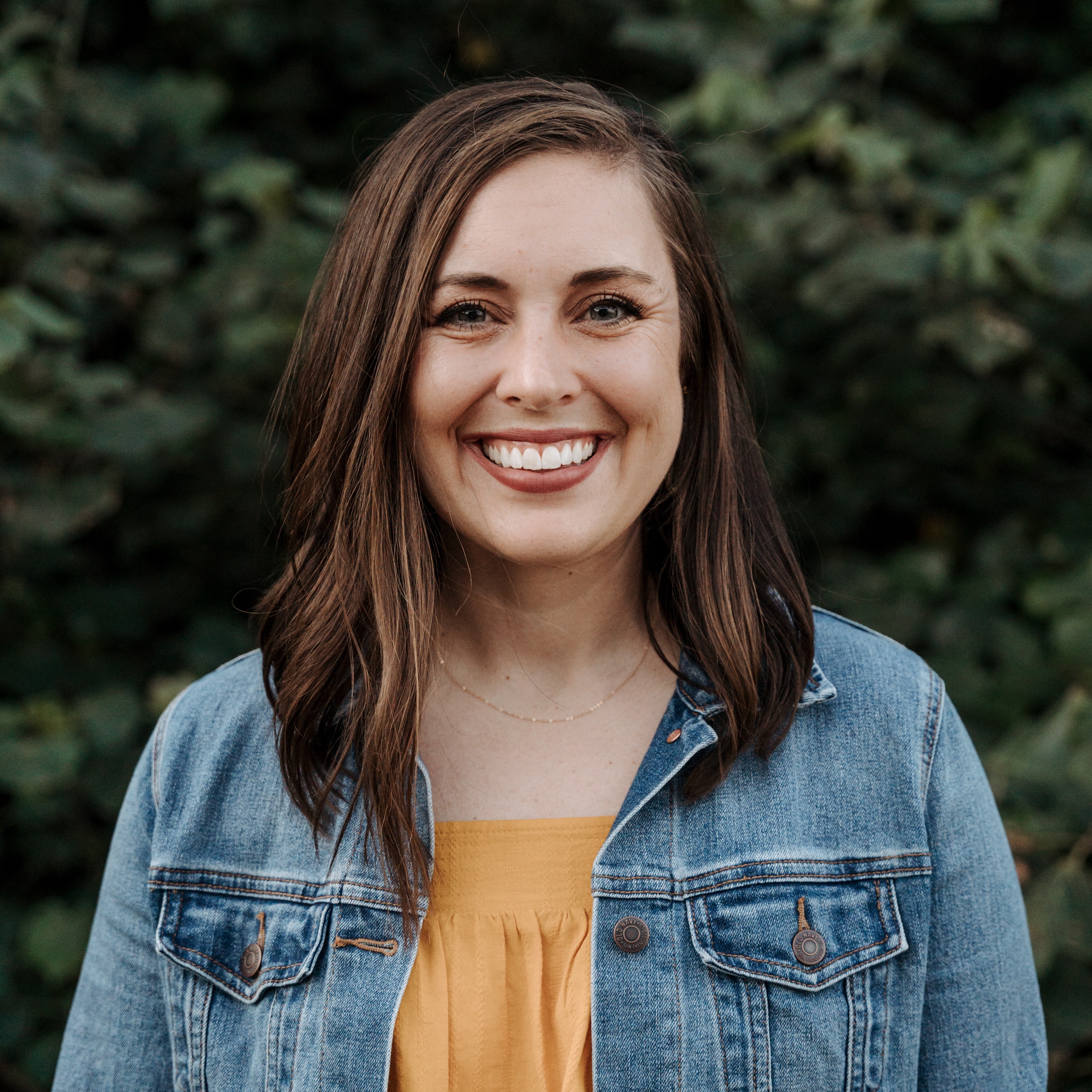
Today, we are going to get to the bot what running, jump roping and justice have in common. And the answer is Marissa the Rope Runner Groenwald. Marissa is a South African endurance athlete who has taken running to a whole new level, completing marathons and even ultramarathons while skipping rope the entire way. What started out as a personal challenge has become a God given mission to fight human trafficking, raising funds and awareness for Love Justice International's prevention work.
Her bold, unconventional approach has opened incredible doors, sparked countless conversations, and inspired people around the world to ask, how could God use my gifts, passions and skills to fight injustice? Let's dive in.
[00:01:15] Speaker A: Well, Marissa, it's so good to have you on the podcast today. We're so grateful that you're here. You're here. Welcome.
[00:01:22] Speaker C: Thank you. I feel honored to be here. Thank you so much for having me.
[00:01:27] Speaker A: I love it. Well, let's, let's dive right in. Because you run marathons, you run ultra marathons.
I, I don't think that's something I could ever do, to be honest. I don't know that I'm just built for that.
But you do it. And, and our listeners and our, our viewers need to understand that you do it while jumping rope, like you're skipping rope the entire way. I mean, how did you even come upon the, like, when did you go, oh, I could do this?
[00:02:01] Speaker C: That's a great question.
So I didn't wake up one day and think to myself, oh, today I'm going to try my hand at rope running. It happened organically and almost accidentally. You know, reflecting back now, I see it as a divine download.
But I was running extensively even before the whole rope running started. I did normal running and I did trail running. And in that time I incurred an injury on my hip. And I heard that skipping in the gym or rope running or not rope running, rope jumping in the gym would be a form of fitness.
And it became boring pretty quickly. And I thought, well, I like running. I like this skip jump rope thing. Let me combine the two. Surely it's a thing.
And I remember going to the, going to the Internet that evening and searching people who run with A skipping rope. And there was nothing, no one on planet Earth doing it. I was so surprised because I couldn't believe it. I was like, well, this is fairly okay.
Long story short, I thought, well, seeing that I'm the only one, why not see if it's possible? You know, maybe a human can do this, maybe it can't. And in that I started running short increments. 1km, 2km or 1 miles, 3 miles, etc, and then look, I, I say this now as if it was easy. It was never easy. It was hard work and I thought it was impossible until I to my first 10 kilometers.
And that led to the first 21 kilometers, which is a half a marathon. And I said to myself, self, if you can do half a marathon, perhaps you can do a full marathon, you know, and that's kind of how it progressed into ultra marathons and then ultimately the Comrades marathon here in South Africa, one of our biggest marathons we have here.
And that's kind of how it happened.
[00:04:01] Speaker B: Yeah, thanks for sharing that, Marissa. And I've had the pleasure of getting to meet with you in person at our program HQ in South Africa and hear you share your story. And one thing that I want to draw out for listeners is just what you called a divine download. And I know that in the athlete world and in that space, athletes get injured and then all of a sudden, you know, they're, they're performing at a caliber and then overnight, you know, they're, they're stationary and they're not being able to do anything. And it's in those moments that I've heard athletes really wrestling with like, okay, am I going to be able to do it again? Am I not? And that was a little bit of your story of you incurred an injury to like, okay, how am I going to make it through? And in the process, you had this divine, this what you call the divine download, that God gave you this vision and connected it to human trafficking. And can you just walk us through that divine download moment and how you knew it was from him and, and what that looked like?
[00:05:06] Speaker C: It's a great question. I, it's, it's very valid that you mentioned that, you know, I, I had an opportunity or a moment where I felt almost like the carpet has been ripped from under me when I had to now take it easy because I've got an injury and what now? And having started the running with the skipping rope, I never thought that it would lead to anything at all.
I was just doing a bit of a crazy thing and seeing how this could work, and maybe it could work well with fitness and all of that. And I remember having a moment.
I think I was on a road coming.
I came out publicly, you know, to see the reactions of people. And in that time, I knew I was. I was opening myself up for quite a bit of potential embarrassment and ridicule and who knows? But as I started rope running up this hill, I could feel cars slowing down, looking at me, thinking. I can imagine them thinking, what is she doing? And why would she be doing this? And that's where the penny dropped for me is, hold on, there's something here.
People are watching, they are paying attention, because who in their right mind would do something like this? And I thought, if I were to have a platform to do some good, well, could this not be something amazing? And that's when I felt, this is it. This is an opportunity to take hands with the likes of Love justice and see where a difference can be made. And, you know, it's in those moments of aha.
I think it's your approach to those aha Moments where I felt it was a divine download, because I know. I kind of know what that looks like from past experiences. Just being obedient to what you hear in your spirit and following through on that and seeing the fruit afterwards, I recognize, oh, okay. Even if it's small or big or whatever it looks like in your life, but there would be fruit for it. And now looking back, I'm like, oh, yes, that was such a cool download and such a divine thing from. From heaven. I feel that now, bearing the fruit of all the good that's coming from it. I'm eternally grateful that I kind of said yes in the crazy moment.
[00:07:39] Speaker A: No doubt. I mean, it's. And it's.
Yeah, like, I. I can't imagine what that thought process was like, right. Like just in. In the in. But being able to recognize, like you said, you know, this actually is draw. It draws attention. And it's not that you're doing it for attention, but that's what led you to realize I can draw attention to something that matters. Right. And it's so cool. It's so cool. Like, and. And then you chose Love justice to be part of that attention drawing, part of that awareness element. Right. What made you. What made you choose Love Justice?
[00:08:17] Speaker C: So, again, I think it was seeds that were planted in my heart.
My parents lived in Asia for a while, and in that time, my mum was very much involved in a. An organization that saved and restored ladies that were trafficked.
And I went to visit them. And now I didn't realize the effect it would have on me up until the time that I was faced with a choice of, okay, well, what kind of where would you want to do good, Marissa? Where would you want to place attention or awareness on?
Because I saw the difference that the. The restoration the ladies went through and how beautiful that was. Only years later did I realize that if ever I was to represent something, it would have to do with. With human trafficking. And I met, you know, in the area that I stay. I just went for a casual coffee, bumped into a friend, told him about this whole rope running thing that I'm doing, and kind of came out, and people were knowing. They knew what I was doing, beginning stages. And I said, yeah, but I would really like to connect with, you know, a human trafficking platform. I just don't know what this looks like. I don't know people. And he's like, marissa, my wife, works for Love Justice. Why don't I connect you two and then perhaps we can go from there? And I was like, what?
Obviously, God knew this was gonna happen, and that's kind of. The rest is history. It flowed so lovely. I've never pushed any door that has opened subsequently, and it's just been effortless. And now it's. For me, it's just such an honor to be part of this.
This fight together.
[00:10:02] Speaker B: Yeah, I. I love that analogy of, like, saying yes.
[00:10:07] Speaker C: We.
[00:10:07] Speaker B: We actually had a guest on the podcast last season who talked about saying yes to the adventures that find us and you saying yes to that adventure. And there's almost like, a current that comes with it. That's almost a sense of ease or just a sense of, like, okay, God is like, multiple steps ahead of you. And that one inter was like, the steps that he had set out for you. Like, should you accept the invitation to say yes to this adventure? And we'll get into kind of, like, some of the ways that this has opened doors for you. But first for our listeners, like, I really just want to make it practical for a second, because we kind of glossed over the ultra marathon in the intro. And just to break that down, practically South Africa is known for the Comrades Run, which is in Durban. And it's a full day. People have to finish it in 12 hours. There are several people that don't finish in 12 hours. They have to qualify. And it is 90 kilometers. And so for our. Our U.S. audience, that is 60.
What? No, 56 miles.
And Marissa's doing it while jumping a jump rope. Like, it is. I Can't even, I can't even put it that way. I can't even fathom running that, let alone running that with a jump rope.
And what I think is so fun is that what you're doing is so visible and it's such an unusual, unique way to advocate for justice. So how have you seen God use that and open unexpected doors, spark conversations that never would have happened otherwise?
And would you just be able to share?
You have many stories, Marissa, but share with us, like maybe your top one or two where it was like, wow, I, I could not have fathomed that door being open.
[00:12:02] Speaker C: Oh, shisha, like you said, I've got so many stories, but I think it's in the, and it's in the small messages and the encouraging words and the messages of inspiration that I received from numerous people saying, wow, Marissa, we never thought this was possible, but if you can do this, then surely I can do that. Or if you could run two oceans, which is also an ultramarathon rope running, then surely I can finish it and also take on the other things. People have now subsequently started doing things in their lives because they heard this girl, the rope runner, is, and have done all these crazy things. So surely if she can do that, I can do that. So it's a, it's a definite form of inspiration and almost like a penny dropping in people's hearts, being willing to be vulnerable in the, I guess, situations, their fearful mindsets of what would people think or how would this look? Etc, and disregarding the outside noise and getting on with what's in their hands to do so. I mean, if you ask me for numerous stories, I, I really have so many. But it all kind of, all of them boiled together, boils down to this, this, I guess, principle of creating a platform of hope, inspiration and planting seeds that.
Sheesh. If you put your heart to it in your mind and if you trust God with what is in your hand, he will make it grow. No, regardless of what, regardless of what you look like. You know, Jason, you said that, yes, this is a great platform. And I honestly, I, I couldn't give two hoots if, if it was about me, because I probably wouldn't do it because it's not how I'm wired.
But the fact that it is drawing so much attention is incredible.
And that in that people asking and staring and the question coming up continually is, but why?
Like that is the right question. That is exactly what you need to be asking because this is the heart behind it. This is our fight against human trafficking. This is taking hands with love, justice, and making a difference.
[00:14:26] Speaker A: That's so good. It's so good. And I just affirm to our listeners and viewers the times I've had with you, the interactions Cambry, one of our other teammates, has had with you, all of our staff. It's clearly not about you.
You don't do this just for you. And, and. And you've truly surrendered in that sense to how the Lord's leading you in this and the Spirit's giving you power in this. It's just amazing. And, and, and, and so, I mean, thank you. Right. First of all. But, but you. You really are an inspiration to others. I mean, I was sharing with our kids the first time I heard about you. My wife and I were at the dinner table with our. Some of our kids, and I shared with them. And one of my sons runs cross country and as his sport, and he just was kind of trying to process, like, oh, my goodness. You know, and so I think, you know, and I think you're right. Like, people look at that or hear that 26 miles or 56 miles, and they go, why? Right. And so you're inspiring others, though, in this process. You're drawing awareness to the human trafficking issue.
There's people out there who probably would say, I'm not a runner.
I don't have a platform.
You know, human trafficking is too big of a problem.
Right. Like, how do you. How do you respond to that? How do you challenge them, encourage them that you can be creative with the skills, the gifts, the passions, even something you didn't know you could do. Right. You can be creative as you discover the ways that there are things that you can do to bring awareness to issues. How would you encourage somebody, though, that's like, yeah, too big, can't do it, don't have a platform.
[00:16:20] Speaker C: Correct. Yeah, that's a. That's a really great question. And I get asked that often.
Yeah. But, Marisa, you. Are you there? We only here.
I'm just a normal person who said yes. And it just so happened to now be a year on from. Or two years on since I've started that all these things have rolled out. But, you know, Jason, the reality is tomorrow something might happen to me. I can't run, and then what? You know, so I'm always quite cognizant of the fact that there are people who can't run and they feel like, yeah, but I do not have any significant things to add or there's an illness or. So, firstly, the fact that I get to do this is such a privilege and I do not take that lightly. Because to run, not everybody can run. Not everybody can do the things that I do. So I.
Firstly, if ever you think like your life is insignificant, rather turn it around and think of what you do have and the fact that you can open your eyes in the morning, breathes a breath of air, that a day has been gifted to you and what can you do in that day?
I would say if you can't run and if you don't have a platform, doesn't matter. What have you got? Do you have a talent? We all have talents. What does that look like? Where does your passions lie?
I always say this. What is in your. Your hands to do? And then your platform is the person in front of you is your family, is the friends around you, is the stranger in the grocery store. That's your platform. You don't have to change the world.
If, if I were to do this to save or protect one person, that would be good enough for me.
It just so happens to be a bigger platform.
But if I stand before Jesus one day and he asks me what did I do with what he's gifted me, then I need to be accountable for that. So what are you doing with what is in your hands today when you are faced with somebody broken and you can reach out to them. That's how we change the world, like every day, little by little. And eventually, who knows where that may grow. You may create a platform and discover something magnificent that would change 100 lives along the end.
[00:18:34] Speaker B: The only word that I have is amen. Like that person just so eloquently. And I. What I love about what you said, Marissa, is a sense essentially being faithful in that. Yes. And then it doesn't matter what the outworking of that looks like. In fact, it just so happened that it.
You had a lot of favor, like you've had wild favor in this journey. And I think it's probably fair to say you didn't have the platform in the beginning, but you were so faithful to the mission and the divine download that you got that it just opened all these doors where all of a sudden people were looking at you. You were getting calls from people who are organizing races to say, you can go in front. We want you to be safe. We like safety. And. And that gave you a platform. And then you're getting calls from Virgin Active, which is probably the biggest gym in South Africa. You were getting contacted by Spar, which again, big one of the biggest grocery stores in South Africa, and Red Bull and. And those guys saying, like, come and it's just wild. Like, we could go a whole bunch of different directions. But what I think is so cool, Marissa, is you recently got handed a check by one of those sponsors for Love justice. And I think it was the equivalent of about $1,000, which translates to six lives.
So, like, if you get injured tomorrow and you can't run anymore, like, there is this, this element of like, you and your partners have changed six lives forever.
And that is really meaningful.
And that is the invitation. That's the invitation to use what we've been given, what we've been entrusted with and being faithful in where we're meant to steward that, whether it's an audience of one or an audience of thousands. And God can use that. God. And it's kind of like that's his work. That's where he comes in and does what he does and we just get to play a part in the bigger story that is ultimately his story.
So I think, Marissa, this kind of begs the question too. How can people join you?
How can they, like, practically, prayerfully, maybe financially, like, you've got a lofty goal, you are on a mission and you've got some stuff coming up, like, for listeners, and particularly our South African listeners, like, what can they do to partner with you and follow along with you?
[00:21:06] Speaker C: Thank you. I.
I'm quite active on all the social platforms on Instagram, Tick Tock, Facebook and on. There is a back buddy account or platform that people can donate if they feel like they don't know what to do or where to start. I mean, then give something so that the people on the ground can do the work that's necessary to protect lives. You know, if anything, if you can't do that, spread the word, share the news, share my allow. You know, the.
What do they call it, the Bushfeld Telegraph. This way everybody is telling everybody, telling everybody, telling everybody. And at the end of the day, the word gets out there. Do that but. Or. Or support me in.
In whichever means or means or forms necessary. But usually I point people back to my social platforms, the backer buddy account and. Or awareness, which will be practical. And then onwards, you know, I will. I'm taking on an international platform as of next year to create international awareness or global awareness, which for me would be, oh my word, can you imagine the impact that could have on so many lives and how much, how much awareness that could create in people that are oblivious to what's going on right underneath our noses with human trafficking? So I'm Excited about that. I will need a lot of help and support with that, with prayer and finances. And I don't even know what this looks like yet, but I know I'm going to need a lot of support. So however anyone feels to reach out and ask, please do.
[00:22:51] Speaker A: That's so good. That's so good. I mean, you know, my dream, my dream with, with you is that eventually you even need a business manager. Right.
[00:22:59] Speaker C: Like you have to help you, to.
[00:23:02] Speaker A: Help you oversee the opportunities. I mean, or a chief of staff or whatever. Right. Like, you know, but someone that, that, that can help you oversee the opportunities and, and, and then it multiply. Right. Like almost. It isn't just your opportunities. You, you start having people come alongside who say, help us do this. Right? Help us do this too. And I mean, I, I, when every time I talk to you, I feel like I walk away going, you know, man, this, like, this isn't hard, right? You, you, you, you did, you just did what you thought, oh, this would probably work. This would draw it to, this would make people go, why? Right. And I think that's so powerful.
So let's ask out of a story.
[00:23:49] Speaker B: We have to clarify that.
[00:23:50] Speaker A: Yeah, let's clarify.
[00:23:56] Speaker B: I have run back to back ultra marathons.
And to say that it wasn't hard.
[00:24:02] Speaker A: Yeah, let me, let me rephrase that. What I meant wasn't hard is actually leaning in and saying I'm going to do something and responding with that. Yes.
And then executing it is hard, regardless of what that is. I cannot imagine running a 5k, much less a marathon, but nonetheless, that's just me. So I did, I played a lot of basketball. I can do that. But, but so let me ask a fun, just kind of a fun question, if that's okay.
No, and you know, I mean, I jumped rope as a kid.
Right. Like, we've got folks who are listening that probably did as well. I grew up in inner city New Orleans, so you may not. Maybe this didn't happen in South Africa, I don't know, but I'm assuming it did. But I had lots of my friends, we would get together and you would get two ropes, two people, and you're doing the double Dutch stuff and all that. Like, I, I mean, I, I did that like I was in, in on all that. And you know.
[00:25:05] Speaker C: So you're a rope runner, effectively. One day you'll become one.
[00:25:09] Speaker A: If it's, if running in place counts, then yes, yes, sure.
But like, what. Talk about the jump ropes. You use the, like, I can't because here's the reality of it. If there's wind, it's hitting the street for 26 miles. It's like, does it actually last? How many do you use per race? Like, you know what I mean? Like, talk about that practical side.
[00:25:34] Speaker C: Yeah, no, good. Good question. So when I started this journey again, I kind of had to work through a variety of things that would work. Doesn't work, may work. So I discovered that this thing called a speed rope for me works brilliantly. And that's a very little agile wire with a plastic sleeve around it. That's. That cuts through the air with light handles. And I've now I've had to start making my own skipping ropes because you don't buy these things stock standard. And also the handles fly off and it's just. It hits everything. And I'm like, this can't be working for me. I'm gonna do mechanisms so that I can have them here, and it's easy, and I can just get on with the running. And so now I'm making my own skipping ropes. But a rope would last me 20 kilometers, 20 to 30 kilometers, because the plastic would wear through on the tar, and then the wires would come through and it would start fraying, and that would start cutting into my legs, and it's just blood everywhere. So it's literally blood, sweat, and tears that I have had to work for.
And on these ultra marathons, I would go through two, three ropes, sometimes four ropes, depending on the surface of the road. So I. I wear a backpack with extra ropes here. I've got some seconders next to the road that would change ropes for me, and that's kind of how I got on. But this was all a journey. I realized, oh, I'm cutting my legs open, there's blood everywhere. I probably need to change ropes because I can't be using this one over and over. And that's how it progressively changed. And now I've got loads of ropes. I mean, I have a rainbow of ropes, and it's hanging there. I'm keeping all my ropes because one day I'm gonna have a museum with all my ropes.
This is the rope running history right here.
And it's so many, so many of them.
[00:27:27] Speaker B: You know what? I'm going to, like, speak this into existence, that by the time this is all said and done, each rope is going to represent a life by the time, like, maybe, maybe if we can, like, dream big. You count up all of your jump ropes, and it is equivalent to how many intercepts were funded through Your platform.
Just believe that to be true someday.
[00:27:51] Speaker C: Yes, I like that. That's absolutely. Let's do that.
[00:27:54] Speaker A: And I'm going to speak this into existence. Well, maybe, who knows? But like, how fun would it be, especially that you're. When you're designing your own rope. Like, how fun would it be for us to find someone that makes the rope runner rope for you, which you've probably already thought of.
And we get every one of our donors, whether they're a grandmother or a mother or a sister, to go buy a rope runner rope to support like, and give it as a gift. Anyway. Sorry, I'm dreaming. I'm thinking out loud.
[00:28:25] Speaker C: I love my downloads.
[00:28:26] Speaker B: So Marissa, again, this is like some bonus fun questions of like the practical of how this actually works.
What does your prep look like? What does training look like both physically, mentally? What are some of the quirky behind the scene rituals and gear that might surprise listeners?
[00:28:48] Speaker C: Okay, I look also, again, just to be hand and heart on sleeve.
When I started this journey, I didn't expect to do all the things that I do. So there was, there's no blueprint of training as a rope runner. I kind of just made it up as I went.
There's no one I could phone and say, hey, how did you handle doing your first marathon as a rope runner? I was in, you know, so people probably phone me one day and say, hey, Marissa, how did you know?
So in that journey, I thought to myself, well, what did I do when I trained for my first ultramarathon? Let's do that. But add a skipping rope and maybe some more strength training and just upping the ante in terms of the muscles that I'm using now because I'm not just using legs, I'm now using arms and I'm using back. Because this is, this is the action that you go for. And if people have a look at my social platforms, they'll see I run quite quickly. You can see me coming from a mile away. It's a school with this.
[00:29:47] Speaker B: You know it.
[00:29:48] Speaker C: You ask, what is she doing?
And that recruits different muscles. So I've had to change my training regime quite a bit.
It, it adds to overall fitness. So yes, I've done everything I used to do for training for ultra marathons, but I'm now rope running, I suppose just normal running. And I've added some strength training and some quirks before.
I don't, I haven't really changed anything unnecessarily apart from adding a skipping rope.
I think that's quick enough. So everybody has their little photo with their race bib and their shoes and everything. No one has a skipping rope with this, I guess take. That's mine, you know, and that's quite cool.
[00:30:35] Speaker B: Yeah.
Marissa, get a little bit deeper for a second, if you will allow us to.
I'm curious, you know, you've said you've been doing this for about two years now and now kind of post the yes. Like you're well living into the yes of that adventure.
How's God been speaking to you and how has he been encouraging you in the last two years? And do you feel like there's anything simmering or bubbling in terms of what you're learning and experiencing of Him?
[00:31:09] Speaker C: Yeah, it's really great. The journey has changed quite a bit for me.
So comparing it to the journey of having prepared for other runs or other marathons, just running normally I would be surrounded by community and people and chatting and all of these things. This journey has been a very lonely journey of a lot of solitude and alone time on the road because it's quite an unsocial thing to run with a skipping rope and having to, you know, to chat to somebody.
And it also creates a bit of a barrier because people can't just come and like, run here. There's. There's a space. And in that time, I've had to become aware of the fact that it looks different. It's allowed me to have a lot of quiet time and really reflect on what I am doing, where I am steering, this, what is, what do I feel is God's expectations on me for where I'm going.
And I.
I'm always encouraged by the fact that I feel like I'm getting a.
Okay, yes, my girl. Come on, you've got this. I've got you from Jesus. Every time I get fearful or anxious about this next journey, this next big step, this next thing, I. I feel like I've had this massive big hug and embrace from him on this journey that's special to me, which is also something I've not really had before in the training scene. You know, it's very much rah rah you and getting things sorted, but this is very, very differently focused. It's very outwardly focused.
And now I get opportunities. I'm. I'm being invited to speak at women's conferences and come and share my story and inspire them and tell my heart, you know, and how the journey has taken me from childhood to where I am now and how I've had to give up many dreams and say no to this or yes to this? And heartbreaks and all of these things. And all of this is now coming into this little significant ball of testimony that I'm sharing with girls, which the Road Brother platform has created, in a sense, you know, now I get to share testimony of Marisa's life and hopefully in that, plant many seeds to get girls and people listening and wanting to do the things that God has put in their hearts. Does that answer the question?
[00:33:42] Speaker B: Yeah.
[00:33:43] Speaker C: Okay.
[00:33:46] Speaker B: And what a beautiful word of like, yes, my girl, I've got you.
That's gonna someone. I think you've seen the headlines. You've heard the stories.
Children are being trafficked every single day, and everything in you says, this has to stop.
But rescuing kids after exploitation is never enough. If it were your child, would you sleep soundly knowing that they might be found after being taken, or would you want to know that they were never taken at all? At Love justice, we've spent the past 20 years building a proven model to stop trafficking before it happens. Training local monitors, intercepting at key border points, and reuniting kids with their families. We can do this for $112 per person intercepted, but there are more borders, more children, more lives at risk than we can reach right now. That's where you come in. Join Project Beautiful, our monthly giving community, and stop trafficking before it starts. Visit projectbeautiful.org work.
[00:34:45] Speaker A: It's so good. Yeah, I imagine I. I mean, you know, everybody experiences it through the different things that they have to endure, right? But I imagine as you're enduring these marathons and ultramarathons, it's that. That just that. That whisper, right, that whisper that. That reminder of God with us, right? It's so powerful.
Just as we wrap up today, what. What's a final word or a word of encouragement you might give to our listeners and viewers?
And it can be anything, anything that God puts on your heart. But I just would say I really admire, and I've heard it from you in multiple times now.
You really want the fruit of what you're doing to grow and blossom in other people's lives.
And that's really what spiritual fruit is, right? Like, that's. That when Jesus talks about, you know, abide in me and you'll bear much fruit. It's not just fruit for me, right? It's. It's fruit that starts growing in other people's lives. It's. It's. It's what he did, right, when he.
And he even said, you'll do greater things than me. In John 14, which, you know, doesn't make any sense, right. Like, he's Jesus. But I think the, what he's saying isn't, you're going to go down the cross. That's not what he's saying. What he's saying is you're going to go and, and take this even more, into more places, into more lives with more people than I ever did. And, and, and he is with us in doing that. And I love that that's your heart. And so just as you wrap today, as we wrap this today, like, what would you leave with those that are hearing this, that are listening to this, that that might be challenged or encouraged by this story?
[00:36:37] Speaker C: Well, firstly, I'm going to stand in front of Jesus one day and just say, well, Lord, you walked on water, but did you rope run? You know, just kidding.
[00:36:47] Speaker A: Why didn't you rope run across the water? That's right. That's right.
[00:36:53] Speaker C: You know, having been on this journey and people ask me, what is my.
What would I leave people with? It always changes because I always feel like my journey is always changing and my message would always be different. But what I have seen is, it is utterly important what you apply your mind to, what you meditate on. And from that, what do you fill your mind with? Are you, do you allow yourself to become victim, a victim of your circumstances years ago or where you are now, or you can't do this, or your age or your race grace or your what have you? Are you going to stay stuck in that? Or are you going to just say, you know what, that is what it is.
I'm going to turn my thoughts around and meditate on the things that are good and wonderful and praiseworthy. And I'm going to apply my mind on things that I know that is in my, in my capability of doing. And this comes back to what's in your hand to do. And after that, your words will follow because this is going to drop in your heart and then you're going to start speaking differently. You're going to start speaking life over your own circumstances. You know, the word says life and death is in the power of the tongue, and those who live by it will eat its fruit. So what are you speaking over? Your life? What are you speaking over? Your destiny and your future and your past and everything and your family and anything that is surrounding you. Because your thoughts become your words, become your life, becomes your habits. So watch those small things. Those are the seeds that you are planting for whatever future you are going to, and whatever fruit you are going to harvest at the end. Because at the end of the day, you can't fake your fruit. You will be known by it. So make sure that if you decide today, which is, by the way, a gift to all of us, to start something, make sure that it's good seeds, good soil.
[00:38:46] Speaker A: So good. It's so good.
[00:38:50] Speaker B: Marissa, thank you for joining us this morning. This afternoon, we're in. We're in different time zones between the three of us, but really just appreciate the time you took to chat with us and we are absolutely cheering you on or watching you. We are like hanging on your every post of just what you're up to and just so thankful for what you're doing. On behalf of the least of these.
[00:39:16] Speaker C: Thank you so much. I have had a blast chatting to you guys. Thank you for the opportunity and for the privilege of taking hands with Love justice and making difference together, you know, together we are protecting so many lives and it's an honor.
[00:39:36] Speaker A: We are grateful for the generous support of the Love justice community. Please consider joining our family of donors. Learn more at lovejustice ngo.